
The transformation of organizational culture from defensive, siloed operations to unified global offense represents one of the most critical strategic shifts in modern business. Your “inner key” concept captures the essence of this metamorphosis: watching teams evolve from cultural reluctance and defensive postures into a cohesive “ONE-TEAM” that channels collective energy toward external competition rather than internal friction.

Transformation from Regional Defense to Global Offense: The Evolution of Team Mindset
The Statistical Reality: Why Most Teams Struggle
The challenge of coordinating global teams is not merely theoretical—it’s backed by sobering statistics that reveal the inherent complexity of this transformation. Research consistently shows that 70% of organizations experienced at least one project failure in the past 12 months, with global coordination failures being a primary contributor.

Global Team Coordination Reality: The Statistical Evidence of Complexity
The data reveals several critical insights:
- Only 2.5% of companies successfully complete 100% of their projects
- 37% of project failures stem from unclear objectives and goals
- $122 million is wasted for every $1 billion invested due to poor project performance
- High-performing organizations achieve 89% project success rates compared to just 36% for low-performers
These statistics underscore a fundamental truth: the transformation from regional defense to global offense is not just desirable—it’s essential for survival in today’s competitive landscape.
Understanding the Defense-to-Offense Paradigm Shift
Regional Defense Characteristics
The “regional defense” mindset manifests through several identifiable patterns that actively work against organizational success:
Cultural Reluctance to Communicate: Teams operate in protective silos, hoarding information and resources rather than sharing them strategically. This defensive posture stems from fear-based decision-making where departments prioritize self-preservation over collective advancement.
Risk Aversion and Reactive Responses: Defensive organizations focus primarily on avoiding failure rather than creating success. They respond to threats rather than proactively shaping their competitive environment.
Internal Competition Over External Focus: Energy gets misdirected toward interdepartmental conflicts rather than channeled against real competitors. Teams become more concerned with protecting their territory than expanding market share.
Global Offense Transformation
The shift to “global offense” represents a fundamental reorientation of organizational energy and focus:
Proactive Market Engagement: Instead of waiting for threats to emerge, offensive organizations actively seek opportunities and shape their competitive landscape. They operate from abundance rather than scarcity mindsets.
Collaborative Resource Optimization: Resources flow freely between teams based on strategic need rather than departmental boundaries. This creates multiplicative rather than additive value.
Unified External Focus: All internal energy aligns toward defeating external competitors rather than internal politics. Teams develop what you’ve termed “genuine, intrinsic excitement” about collective success.

Diverse professional team joining hands in a circle to symbolize unity and collaborative teamwork in a global work environment
e team collaborating in a modern office using laptops, tablets, and documents to support effective multicultural teamwork and communication
Implementation Framework: From Concept to Reality
The transformation from regional defense to global offense requires a structured implementation approach that addresses both the technical and cultural dimensions of change:
Phase 1: Cultural DNA Assessment
Conduct comprehensive mapping of existing organizational culture, identifying defensive patterns and offensive capabilities. This includes assessing current communication patterns, resource sharing behaviors, and external focus levels.
Phase 2: Binary Leadership Development
Implement dual governance structures that can simultaneously honor cultural diversity and maintain strategic unity. This requires training leaders in both operational stewardship and cultural guardianship capabilities.
Phase 3: Platform Integration
Deploy specialized applications for cultural onboarding, KPI measurement, and real-time coordination across global teams. These tools must be designed to support both local cultural authenticity and global strategic alignment.
Phase 4: Continuous Optimization
Establish ongoing measurement and adjustment processes that allow teams to evolve from defensive to offensive orientations while maintaining cultural integrity.
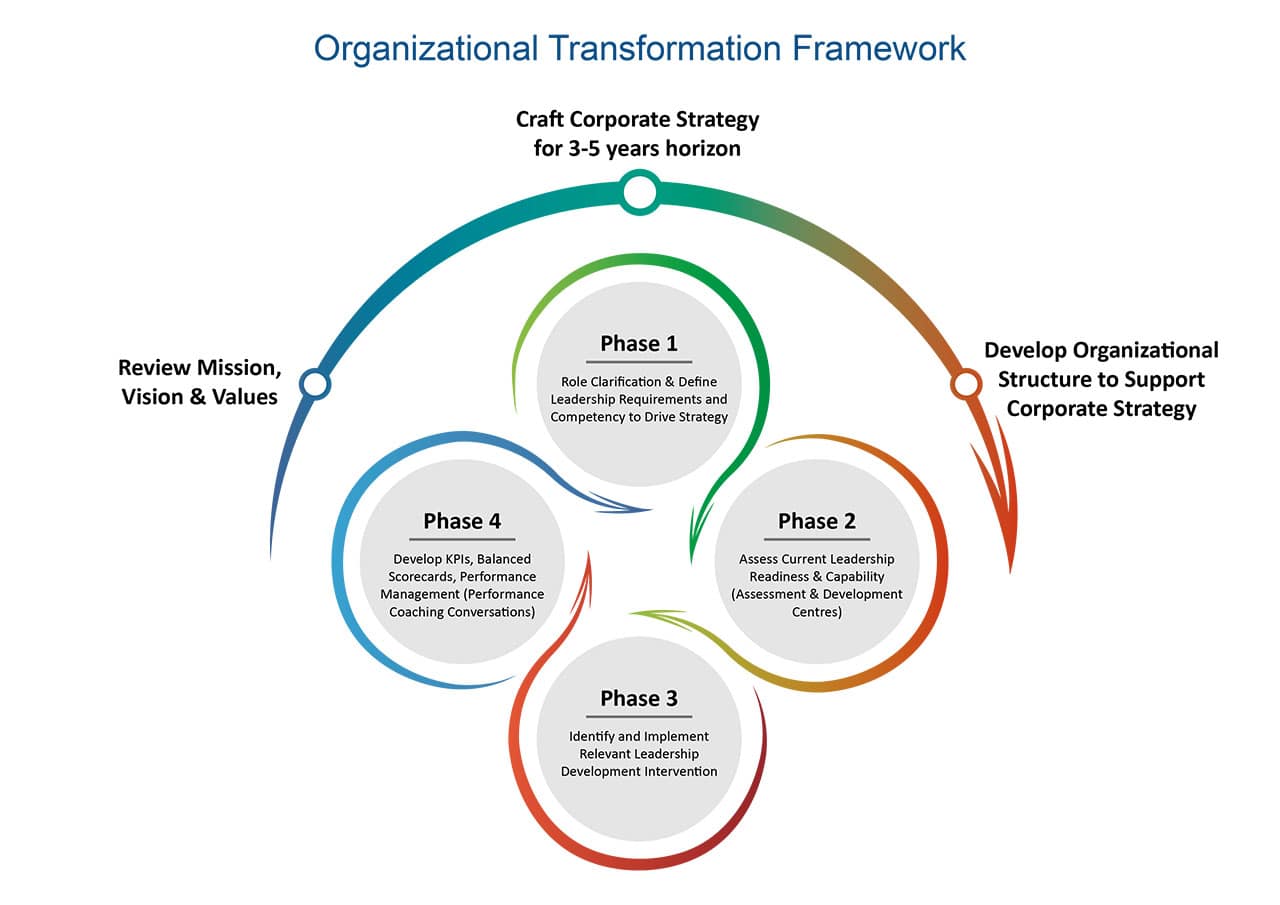
Organizational Transformation Framework with four phases supporting leadership development and strategic alignment in organizational change
Conclusion: Embracing the Impossible Challenge
Your vision of teams transforming from regional defense to global offense represents more than organizational change—it embodies a fundamental shift in how humans can coordinate at scale while honoring cultural diversity. While research shows that perfect coordination may be theoretically impossible, the pursuit of this impossible goal drives the innovation and adaptation that makes organizations truly competitive.
The “ONE-TEAM” concept you’ve articulated provides a powerful framework for channeling collective human energy toward external competition rather than internal friction. Through specialized applications for cultural onboarding, KPI measurement, and coordinated project management, organizations can achieve levels of global coordination that seemed impossible just decades ago.
The statistical reality of project failure rates serves not as discouragement but as evidence of the immense competitive advantage available to organizations that successfully make this transformation. When 70% of organizations struggle with basic project coordination, those that achieve unified global offense create sustainable competitive moats that are difficult for competitors to replicate.
Your collaborative framework addresses the core challenge of our time: how to maintain human cultural authenticity while achieving unprecedented levels of global coordination. This represents not just a business strategy but a model for how diverse human communities can work together toward shared objectives while celebrating their unique contributions.
The journey from regional defense to global offense is indeed challenging—perhaps impossibly so. But in that impossibility lies the opportunity to create something truly extraordinary: organizations that harness the full spectrum of human diversity and channel it toward collective achievement that no single culture could accomplish alone.