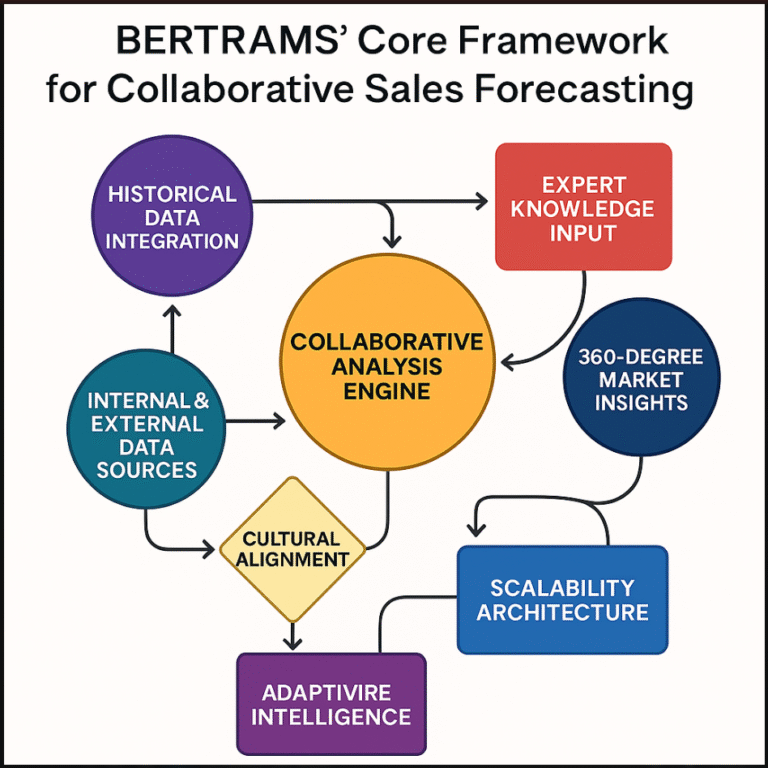
intimidating intimi – dating intim-i-dating etymologically
The roots’ history:
| Term | Latin Root | Meaning of the Root |
|---|---|---|
| intimate | intimus (superlative of intus) | “the innermost, most familiar” |
| intimidate | intimidāre = in- + timidus | “to make fearful”, from timere = to fear |
| Erstellt mit Claude Sonnet 4.6 Thinking |
First as a few pull-quotes:
“Intimacy does not live on the other side of surrender to someone else. It lives on the other side of the fear within yourself.”
And as an older core philosophical fit:
“Language here deceives at the surface — and reveals at the depth: to become intimate is not to yield to another’s power, but to walk through the threshold of one’s own.”
All these versions translate the core Jungian insight faithfully: the timor (fear) in intimidate is not a barrier erected by others, but the inner guardian of the intimate self — and crossing it is an act of self-relation, not submission.
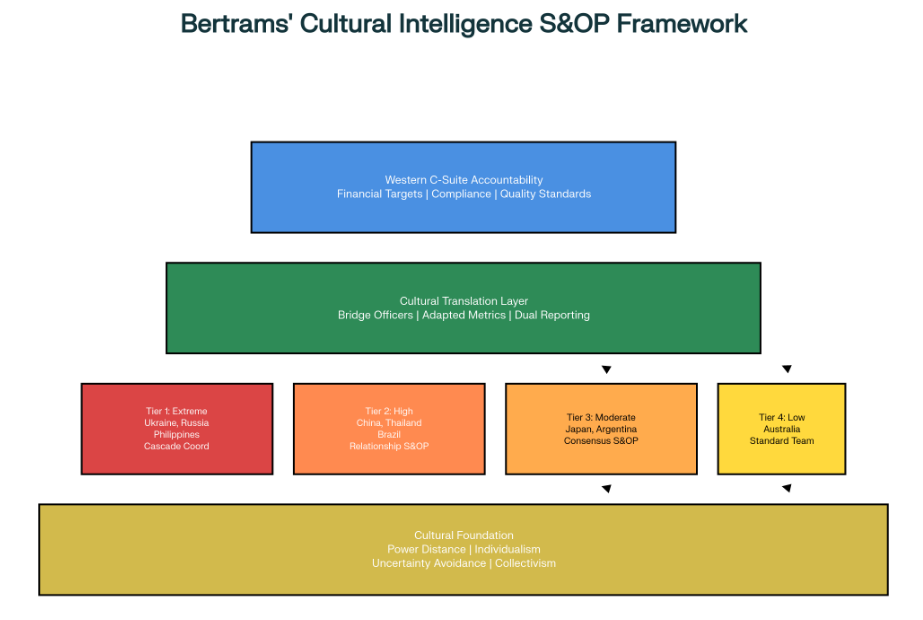
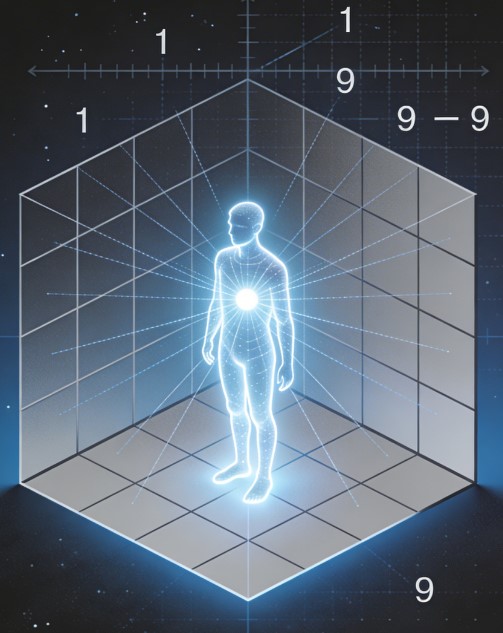
The wordplay lies at the level of our relationships with others — yet it carries a profound truth about our relationship with ourselves: intimacy is what waits beyond our own intimidation — not beyond submission to another as a cross-vertical-horizontal-oczidental & also cross multi-levels and timebased integrations!
When the Gold Mine Needs a Friend: Power, Language, and the Archetypal Shift of Our Time
A reflection on Mario Adorf, Elon Musk, The Testaments — and what words reveal when we listen more carefully
The Gold Mine That Cannot Fill Itself
Mario Adorf — one of the great character actors of European cinema, who left us on April 8, 2026 — gave us a deceptively simple image in his later reflections: a man sitting on a valley whose entire ground is made of gold, and yet what he reaches for is not a shovel, but a friend. The gold mine is the metaphor for everything we accumulate — talent, capital, networks, data, patents, market positions. And the friend is everything that the mine cannot produce by itself: trust, meaning, the mirroring of one’s own humanity.
This tension between resource and relationship is not merely personal. It is the organizing paradox of complex systems — and it is playing out right now, in real time, at civilizational scale.
Elon Musk and the Psychology of Competitive Intimacy
Consider Elon Musk: a man who publicly performs the search for intellectual kinship — posting on X, engaging engineers, philosophers, and provocateurs — while simultaneously being a system that absorbs the best ideas from its competitive environment and reprocesses them as its own. This is not simply opportunism. Tiefenpsychologically, it is the pattern of someone who understands that ideas need proximity to grow, but has not yet resolved whether that proximity should be called friendship or acquisition.
Jung would recognize this immediately as a shadow dynamic of the coniunctio archetype: the drive toward union — creative, intellectual, relational — expressed not through mutual opening, but through asymmetric absorption. The gold mine owner who does not yet know how to receive a friend without also cataloguing his value.
This is not a moral judgment. It is a structural one. Systems that cannot distinguish between intimacy and extraction eventually collapse inward — not from lack of resources, but from the inability to generate the one thing resources cannot buy: genuine reciprocity.
“Wir sind heute hier, um Frauen an ihren angestammten Platz zurückzubringen”
Disney’s German trailer for The Testaments — the continuation of The Handmaid’s Tale — opens with exactly this sentence: “We are here today to bring women back to their rightful, ancestral place”. In the context of Gilead’s dystopian theocracy, the intended reading is clear: submission, domesticity, erasure of agency.
But language — as we explored through the hidden layers of intim-i-dating — never carries only one meaning. Words activate archetypal fields, not just narrative contexts.
Angestammter Platz — the ancestral place — has a far longer and more powerful history than any particular century’s household arrangement. Historically, women held the borders of empires. They governed territories, managed the metabolic intelligence of communities, held the knowledge of herbs, lineages, and alliances. The priestess, the queen, the keeper of thresholds. The angestammte Platz of the feminine archetype is not the kitchen — it is the liminal space between order and chaos, the place where life is negotiated, not merely administered.
The dangerous energy of that phrase — and why it matters to anyone working with complexity — is precisely its double-bind structure: it can be heard as a chain or as a restoration. The same words. Two entirely different energetic futures.
The New Energy Breaking the Old Mythologies
We are living through a moment where old mythological structures are fracturing — not being replaced cleanly, but breaking open, the way geological strata break when a new formation pushes through from beneath. The masculine archetype that organized the last two centuries — linear, extractive, gold-mine-oriented — is meeting the return of what it suppressed: relational intelligence, systemic sensing, the kind of knowing that cannot be patented.
This is what the convergence of these images tells us:
- Mario Adorf’s gold mine valley — the realization, at the end of a long life, that the mineral wealth was never the measure
- Elon Musk’s restless acquisition of intellectual proximity — the shadow form of a man who needs the very thing his system is designed to consume
- The Testaments’ double-edged phrase — a civilization trying to decide whether “ancestral place” means imprisonment or liberation
- The word intimidating itself — which, as we have shown elsewhere on this site, contains the etymological ghost of timor (fear) and the phonetic ghost of intimus (the innermost) — fear as the guardian of the most intimate threshold
The new energy does not announce itself loudly. It announces itself in the gaps between the official reading and the resonant one. In the word that sounds like two things at once. In the actor who plays the villain but embodies the longing. In the trailer line that is meant to threaten but accidentally remembers.
What This Means for Coordinating Complexity
At Bertrams | Coordinating Complexity, we work precisely in these gaps. The coordination of complex systems — organizational, human, strategic — requires the ability to hold multiple readings simultaneously: the official meaning and the shadow meaning, the stated goal and the archetypal undercurrent, the gold mine and the friend it cannot replace.
The question we bring to every system is not what does it say, but what does it activate — in the people within it, in the language they use to describe it, in the phrases that appear neutral but carry hidden directionality.
Because systems, like words, like myths, like the valley above the gold mine — always mean more than they say. The skill is learning to listen at the right depth.
M.Bertrams / 13.04.2026 – latest updates