
The Core Philosophy Behind his new book in 2025
Michael Bertrams presents a revolutionary approach to global management that challenges the conventional assumption of universal applicability of Western management theories. His central thesis argues for Cultural Translation, Not Cultural Domination – recognizing that successful international business requires understanding and integrating the sophisticated wisdom systems that different cultures have developed over centuries of collective experience.
The Four Pillars of Wisdom
Michael Bertrams’ from bertrams-coordinating-complexity.com is building his core topic of the book upon four fundamental wisdom traditions:
- Western Management Philosophy emphasizes individual responsibility, systematic efficiency, and frameworks like Stephen Covey’s Seven Habits. This tradition, rooted in the Protestant work ethic, has evolved into modern entrepreneurial approaches that prioritize personal agency and goal-oriented leadership.
Eastern Wisdom Traditions offer profound alternatives through concepts like Chinese Wu Wei (natural flow and strategic timing) and Japanese Kaizen (continuous improvement through collective excellence). These 2,500+ year-old philosophies teach leaders to act in harmony with natural patterns rather than forcing outcomes through aggressive intervention.
2. Indigenous Knowledge Systems contribute Seven Generation Thinking, where every decision is evaluated for its impact 140-200 years into the future, and Ubuntu philosophy (“I am because we are”), which redefines individual effectiveness as collective responsibility. These traditions emphasize sustainable stewardship of resources and community-centered prosperity.
Visual Design Approach
The book cover designs capture this philosophical integration through carefully chosen visual elements and symbolism.

Book cover design featuring interconnected cultural elements and professional typography
The primary design features interconnected cultural elements that represent the synthesis of the three wisdom traditions. The sophisticated typography and professional aesthetic ensure the book appeals to its target audience of C-suite executives involved in mergers and acquisitions.
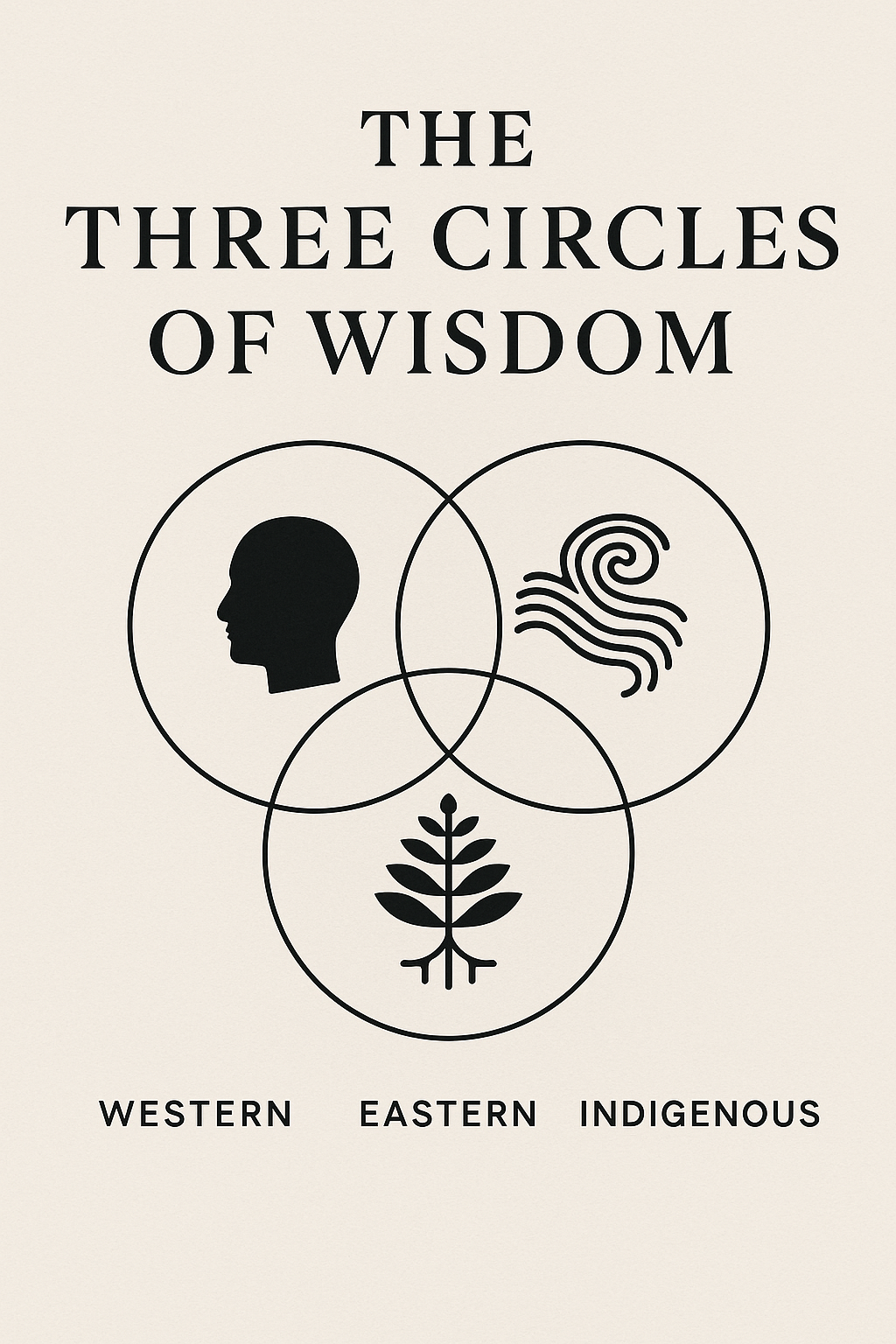
Alternative book cover design emphasizing the three wisdom traditions integration
The alternative design more explicitly emphasizes the integration of the three wisdom traditions, using symbolic representations that honor each cultural approach while demonstrating their harmonious synthesis in Bertrams’ coordinating complexity framework.
The Framework Visualization

Bertrams’ Coordinating Complexity Framework: Integrating Western, Eastern, and Indigenous Management Philosophies
This comprehensive framework diagram illustrates how Bertrams’ coordinating complexity philosophy integrates the three major management wisdom traditions to overcome status quo bias in global business settings. The visual framework demonstrates the practical application of cultural translation in post-merger integrations.
Addressing the Status Quo Bias Challenge
A critical element of Bertrams’ philosophy is overcoming status quo bias – the tendency to prefer current states over change, even when alternatives offer substantial benefits. Research shows that 70% of merger failures stem from cultural misunderstandings, often because organizations impose familiar practices without recognizing the sophisticated alternatives that other cultures offer.
The book cover design visually represents this challenge by showing integration rather than domination, harmony rather than conflict, and synthesis rather than replacement. This approach reflects Bertrams’ insight that cultural resistance isn’t irrational – it protects traditional approaches that may be more effective within their cultural contexts.
Design Strategy and Implementation
book-cover-design-brief.md
Generierte Datei
The comprehensive design brief provides detailed guidance for implementing the book cover vision, including specific recommendations for color schemes, symbolic elements, and typography that honor all cultural traditions while maintaining professional credibility.
Key Design Principles
The visual approach is guided by several core principles:
- Cultural Sensitivity: All symbolic representations respect the wisdom traditions they represent
- Professional Authority: The design conveys credibility and practical business value
- Integration Over Domination: Visual elements show synthesis rather than cultural replacement
- Global Relevance: Imagery suggests worldwide applicability across diverse business contexts
Target Audience Considerations
The design targets three primary audiences: C-suite executives involved in mergers and acquisitions, management consultants specializing in cultural adaptation, and business school academics studying international management. The visual approach balances sophisticated philosophical concepts with practical business applications.
Conclusion
The book cover designs successfully capture Michael Bertrams’ revolutionary approach to global management philosophy. By visually representing the integration of Western systematic efficiency, Eastern natural flow, and Indigenous seven-generation thinking, the covers communicate both the depth of cultural wisdom and the practical value for contemporary business challenges.
This visual identity positions the book as a groundbreaking alternative to traditional management literature that assumes universal Western applicability. Instead, it presents a respectful synthesis that honors the profound wisdom different societies have developed through centuries of collective experience, offering executives and consultants a new framework for successful post-merger cultural integration.
The designs reflect Bertrams’ core insight: true global leadership effectiveness comes not from imposing one cultural framework, but from learning to coordinate complexity by respectfully integrating multiple wisdom traditions into a coherent management philosophy that serves both individual achievement and collective prosperity.